

When choosing a hosting solution for your website, application, or online project, you’ll likely encounter terms like VPS and VDS. While they may sound similar, they cater to different needs and offer distinct advantages. Understanding the differences between VPS (Virtual Private Server) and VDS (Virtual Dedicated Server) hosting is crucial for making an informed decision that aligns with your technical requirements, budget, and performance expectations. In this comprehensive guide, we’ll break down the key differences, benefits, and use cases of VPS and VDS hosting to help you choose the right option for your online presence.
What is VPS Hosting?
VPS hosting stands for Virtual Private Server hosting. It’s a type of hosting where a physical server is divided into multiple virtual servers using virtualization technology. Each virtual server operates independently, with its own dedicated resources like CPU, RAM, and storage, but they all share the underlying physical hardware.
How VPS Hosting Works
VPS hosting uses a hypervisor, a software layer that creates and manages virtual machines (VMs). Each VM acts as an isolated server with its own operating system, applications, and resources. This setup ensures that one user’s activities don’t impact others on the same physical server, offering better performance and security compared to shared hosting.
Key Features of VPS Hosting
- Dedicated Resources: Each VPS is allocated a specific portion of CPU, RAM, and storage, ensuring consistent performance.
- Customization: Users have root access to install software, configure settings, and manage their environment.
- Scalability: VPS plans are flexible, allowing you to upgrade resources as your website or application grows.
- Cost-Effective: VPS hosting is more affordable than dedicated hosting while offering similar benefits.
Benefits of VPS Hosting
- Affordability: VPS hosting is a cost-effective middle ground between shared hosting and dedicated servers.
- Performance: Dedicated resources ensure better speed and reliability compared to shared hosting.
- Isolation: Each VPS operates independently, reducing the risk of interference from other users.
- Flexibility: Ideal for small to medium-sized websites, blogs, e-commerce platforms, and development environments.
Who Should Use VPS Hosting?
VPS hosting is perfect for:
- Small to medium-sized businesses with growing websites.
- Developers needing a testing environment.
- Website owners requiring more control than shared hosting provides.
- E-commerce sites with moderate traffic.
What is VDS Hosting?
VDS stands for Virtual Dedicated Server hosting. Like VPS, VDS uses virtualization technology, but it takes resource allocation a step further. In VDS hosting, the virtual server is assigned dedicated hardware resources that are not shared with other users, mimicking the experience of a dedicated server.
How VDS Hosting Works
In VDS hosting, a physical server is divided into fewer virtual servers than in VPS hosting. Each VDS is assigned a fixed portion of the server’s hardware, such as specific CPU cores or memory, ensuring that resources are exclusively dedicated to that virtual server. This results in higher performance and stability, as there’s no resource sharing among virtual servers.
Key Features of VDS Hosting
- Fully Dedicated Resources: Unlike VPS, VDS ensures that CPU cores and RAM are exclusively allocated to your virtual server.
- Enhanced Performance: With no resource contention, VDS offers superior speed and reliability.
- High Customization: VDS provides full control over the server environment, similar to a dedicated server.
- Scalability: While scalable, VDS upgrades may be more complex due to dedicated hardware allocation.
Benefits of VDS Hosting
- Superior Performance: Dedicated hardware resources ensure consistent, high-speed performance.
- Enhanced Security: Isolation from other users minimizes security risks.
- Reliability: No resource sharing means your server’s performance isn’t affected by others.
- Dedicated Server Experience: VDS offers the benefits of a dedicated server at a lower cost.
Who Should Use VDS Hosting?
VDS hosting is ideal for:
- Large websites or applications with high traffic.
- Businesses requiring guaranteed performance for critical applications.
- Enterprises needing robust security and isolation.
- Developers running resource-intensive applications or databases.
VPS vs VDS Hosting: Key Differences
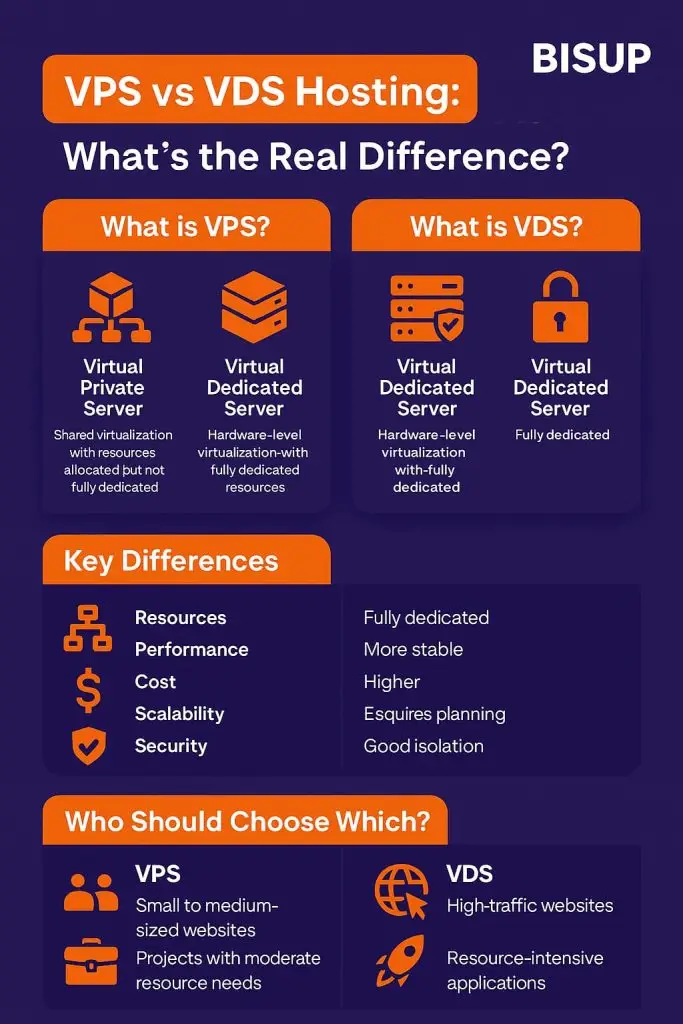
While both VPS and VDS hosting use virtualization, their differences lie in resource allocation, performance, and cost. Here’s a detailed comparison to help you understand:
1. Resource Allocation
- VPS: Resources like CPU and RAM are shared among multiple virtual servers on the same physical hardware. While each VPS has a guaranteed minimum, performance can vary if other users consume more resources.
- VDS: Resources are fully dedicated to each virtual server. For example, specific CPU cores and RAM are exclusively allocated, ensuring no interference from other users.
2. Performance
- VPS: Offers reliable performance for small to medium-sized websites but may experience slowdowns during peak usage on the physical server.
- VDS: Provides superior performance with guaranteed resources, making it ideal for high-traffic or resource-intensive applications.
3. Cost
- VPS: More affordable, as the physical server’s resources are shared among multiple users.
- VDS: More expensive due to dedicated resource allocation, but still cheaper than a fully dedicated server.
4. Scalability
- VPS: Easier to scale, as resources can be adjusted dynamically within the shared environment.
- VDS: Scalability is possible but may require more planning due to dedicated hardware allocation.
5. Use Cases
- VPS: Best for small to medium-sized websites, blogs, or applications with moderate resource needs.
- VDS: Suited for high-traffic websites, large e-commerce platforms, or applications requiring consistent performance.
6. Security
- VPS: Offers good security through isolation but may be affected by vulnerabilities on the shared physical server.
- VDS: Provides enhanced security due to dedicated resources, reducing the risk of interference.
VPS vs VDS: Which Should You Choose?
The choice between VPS and VDS hosting depends on your specific needs, budget, and technical requirements. Here’s a quick guide to help you decide:
Choose VPS Hosting If:
- You’re running a small to medium-sized website or application.
- Budget is a concern, and you want a cost-effective solution.
- You need flexibility and scalability for growing projects.
- Your website doesn’t require intensive resources or guaranteed performance.
Choose VDS Hosting If:
- You’re managing a high-traffic website or resource-intensive application.
- Performance and reliability are critical to your business.
- You need dedicated resources for enhanced security and isolation.
- Your budget allows for a premium hosting solution.
Real-World Use Cases
VPS Hosting Use Cases
- Bloggers and Small Businesses: A WordPress blog or small e-commerce site can run efficiently on a VPS, offering better performance than shared hosting without breaking the bank.
- Developers: VPS is ideal for testing environments, hosting development projects, or running small-scale applications.
- Startups: Growing startups can use VPS to handle increasing traffic while keeping costs low.
VDS Hosting Use Cases
- Large E-Commerce Platforms: High-traffic online stores benefit from VDS’s dedicated resources to ensure fast load times and reliable performance.
- Enterprise Applications: Businesses running critical applications, such as CRMs or ERP systems, can rely on VDS for consistent performance.
- Gaming Servers: VDS is perfect for hosting multiplayer gaming servers that require low latency and high performance.
Factors to Consider When Choosing Hosting
Before deciding between VPS and VDS, evaluate the following factors:
- Traffic Volume: Estimate your website’s traffic to determine the required resources.
- Budget: Compare the costs of VPS and VDS plans from reputable providers.
- Technical Expertise: Both VPS and VDS require some server management knowledge, especially if you opt for unmanaged plans.
- Scalability Needs: Consider how easily you can upgrade resources as your project grows.
- Performance Requirements: Assess whether your application demands guaranteed resources or can tolerate shared environments.
Conclusion
Choosing between VPS and VDS hosting comes down to understanding your project’s needs and balancing performance with cost. VPS hosting is a versatile, budget-friendly option for small to medium-sized websites, offering dedicated resources and flexibility. VDS hosting, on the other hand, provides the power and reliability of a dedicated server at a lower cost, making it ideal for high-traffic or resource-intensive applications.
By evaluating your traffic, budget, and performance requirements, you can select the hosting solution that best supports your online goals. Whether you choose VPS or VDS, both options provide robust, scalable environments to help your website or application thrive in today’s competitive digital landscape.