
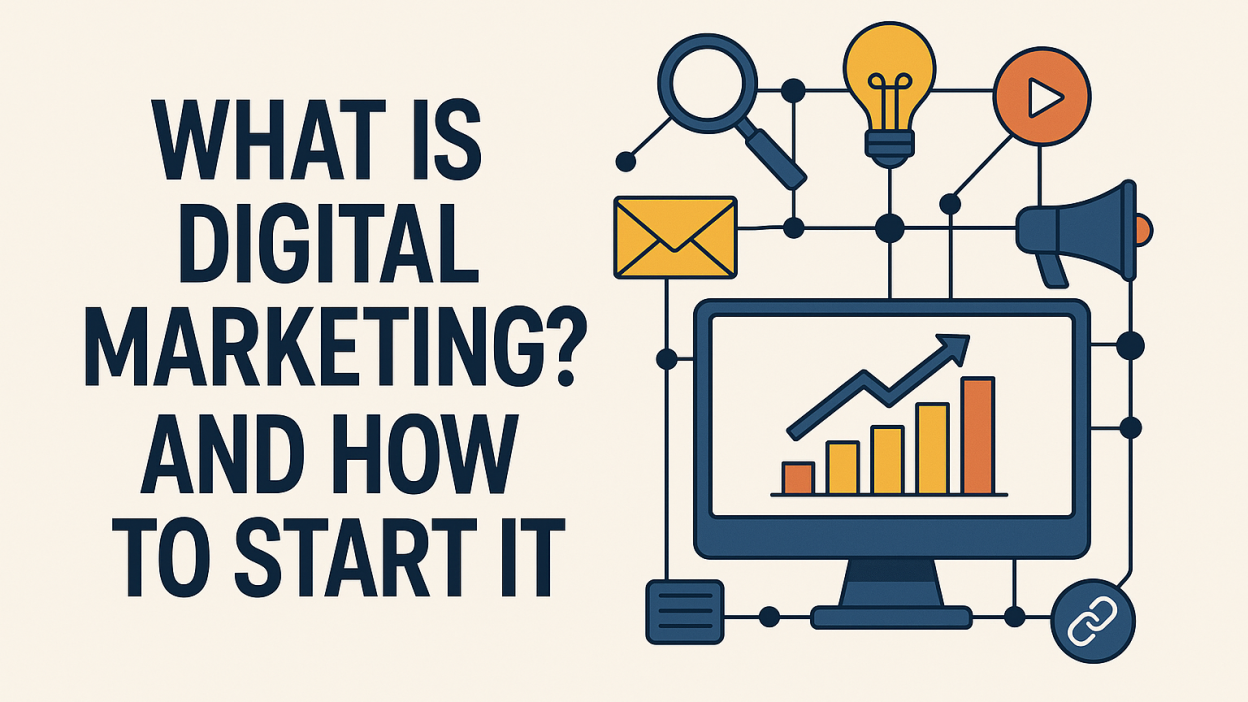
In today’s fast-paced, tech-driven world, businesses are no longer confined to traditional advertising methods like billboards or TV commercials. The internet has revolutionized how brands connect with their audiences, giving rise to digital marketing—a powerful, dynamic, and accessible way to promote products, services, or ideas online. Whether you’re a small business owner, an aspiring entrepreneur, or someone curious about this field, understanding digital marketing and knowing how to start can open doors to endless opportunities.
This blog will dive deep into what digital marketing is, why it matters, and provide a practical, step-by-step guide on how to kickstart your journey in this exciting space. By the end, you’ll have a clear roadmap to begin your digital marketing adventure, even if you’re starting from scratch.

What is Digital Marketing?
At its core, digital marketing is the process of promoting products, services, or brands through digital channels, primarily on the internet. These channels include websites, social media platforms, search engines, email, mobile apps, and more. Unlike traditional marketing, which relies on offline mediums like print ads or radio, digital marketing leverages technology to reach audiences in a more targeted, measurable, and cost-effective way.
Think about the last time you scrolled through Instagram and saw a sponsored post for a product you’d been eyeing. Or when you searched for “best coffee shops near me” on Google and found a local café’s website at the top of the results. These are examples of digital marketing in action—strategies designed to capture your attention, spark interest, and drive action.
Digital marketing encompasses a wide range of tactics, including:
- Search Engine Optimization (SEO): Optimizing websites to rank higher on search engines like Google.
- Content Marketing: Creating valuable content (blogs, videos, infographics) to engage and educate audiences.
- Social Media Marketing: Promoting brands on platforms like Instagram, Twitter, LinkedIn, and TikTok.
- Pay-Per-Click (PPC) Advertising: Running paid ads on platforms like Google Ads or Facebook Ads.
- Email Marketing: Sending personalized emails to nurture leads and build customer loyalty.
- Affiliate Marketing: Partnering with influencers or websites to promote products for a commission.
- Influencer Marketing: Collaborating with influencers to reach their followers.
What makes digital marketing so appealing is its flexibility. Whether you’re a solopreneur with a tight budget or a large corporation with a dedicated marketing team, there’s a strategy that fits your needs. Plus, digital marketing allows you to track results in real-time, so you can see what’s working and adjust your approach accordingly.
Why Digital Marketing Matters
Before we dive into how to start, let’s talk about why digital marketing is a game-changer:
- Global Reach: With the internet, you can connect with audiences worldwide, regardless of your business’s size or location.
- Cost-Effective: Many digital marketing tactics, like SEO or social media, require minimal financial investment compared to traditional advertising.
- Targeted Advertising: Digital tools let you reach specific demographics, ensuring your message resonates with the right people.
- Measurable Results: Platforms like Google Analytics and social media insights provide data on clicks, views, and conversions, helping you refine your strategy.
- Customer Engagement: Digital marketing fosters two-way communication, allowing brands to build relationships with their audience through comments, likes, and shares.
In a world where consumers spend hours online daily, businesses that ignore digital marketing risk being left behind. It’s not just about selling—it’s about creating meaningful connections and delivering value to your audience.

How to Start Digital Marketing: A Step-by-Step Guide
Ready to jump into digital marketing? Here’s a beginner-friendly guide to get you started, broken down into actionable steps. Whether you’re promoting your own business or building a career in this field, these steps will set you on the right path.
Step 1: Understand Your Goals and Audience
Before launching any campaign, clarify why you’re doing digital marketing and who you’re targeting. Ask yourself:
- What do you want to achieve? (e.g., increase website traffic, boost sales, build brand awareness)
- Who is your ideal customer? (Consider age, location, interests, and pain points)
For example, if you’re a local bakery, your goal might be to attract nearby customers to your shop. Your audience could be foodies, families, or office workers looking for fresh pastries. Knowing your goals and audience will shape every decision you make, from the platforms you use to the content you create.
Pro Tip: Create a buyer persona—a detailed profile of your ideal customer. Include their demographics, behaviors, and challenges to guide your marketing efforts.
Step 2: Build a Strong Online Presence
Your online presence is your digital storefront. Start by creating or optimizing the following:
- Website: Your website is the heart of your digital marketing efforts. It should be user-friendly, mobile-optimized, and visually appealing. Use platforms like WordPress, Wix, or Squarespace to build one affordably.
- Social Media Profiles: Choose platforms where your audience hangs out. For example, Instagram and Pinterest are great for visual brands, while LinkedIn suits B2B businesses.
- Google Business Profile: If you have a physical location, claim your Google Business Profile to appear in local searches and Google Maps.
Ensure your branding (logo, colors, tone) is consistent across all platforms. This builds trust and makes your business recognizable.
Pro Tip: Invest in a professional domain name and email address (e.g., [email protected]) to look credible.
Step 3: Learn the Basics of SEO
Search Engine Optimization (SEO) is the art of making your website rank higher on Google and other search engines. When done right, SEO drives free, organic traffic to your site. Start with these fundamentals:
- Keyword Research: Use tools like Google Keyword Planner or Ubersuggest to find words and phrases your audience searches for (e.g., “best coffee in [city]”).
- On-Page SEO: Optimize your website’s content by including keywords in titles, headings, and meta descriptions.
- Quality Content: Publish blog posts, guides, or videos that answer your audience’s questions. For example, a bakery could write a blog on “How to Choose the Perfect Wedding Cake.”
- Technical SEO: Ensure your site loads quickly, is mobile-friendly, and has secure HTTPS.
SEO takes time to show results, but it’s a long-term investment that pays off.
Pro Tip: Start with local SEO if you’re a small business. Optimize for location-based keywords (e.g., “bakery in Chicago”) to attract nearby customers.
Step 4: Create Valuable Content
Content is the backbone of digital marketing. It’s how you attract, engage, and convert your audience. Focus on creating content that’s:
- Relevant: Addresses your audience’s needs or interests.
- Engaging: Uses storytelling, visuals, or humor to capture attention.
- Actionable: Encourages readers to take the next step (e.g., sign up, buy, share).
Examples of content include blog posts, social media updates, videos, infographics, or eBooks. For instance, a fitness coach could share workout tips on Instagram Reels or write a blog on “10 Tips for Staying Motivated to Exercise.”
Pro Tip: Repurpose content to save time. Turn a blog post into a series of social media posts or a YouTube video.
Step 5: Explore Social Media Marketing
Social media is a powerful way to connect with your audience and build a community. Here’s how to start:
- Choose the Right Platforms: Focus on 1-2 platforms where your audience is active. For example, TikTok for younger audiences, LinkedIn for professionals.
- Post Consistently: Share a mix of promotional, educational, and entertaining content. Aim for 3-5 posts per week.
- Engage with Followers: Respond to comments, answer questions, and join conversations to build relationships.
Pro Tip: Use scheduling tools like Buffer or Hootsuite to plan and automate your posts.
Step 6: Experiment with Paid Advertising
If you have a budget, paid ads can amplify your reach. Start small with platforms like:
- Google Ads: Run ads that appear when people search for specific keywords.
- Facebook/Instagram Ads: Create targeted ads based on demographics, interests, or behaviors.
- TikTok Ads: Great for reaching younger audiences with creative video ads.
Set a daily budget (even $5-$10) and monitor performance to see what works. Most platforms offer beginner-friendly tutorials to guide you.
Pro Tip: Use A/B testing—create two versions of an ad with slight differences (e.g., different images) to see which performs better.
Step 7: Track and Analyze Your Results
Digital marketing is data-driven, so tracking your performance is crucial. Use tools like:
- Google Analytics: Monitors website traffic, user behavior, and conversions.
- Social Media Insights: Tracks likes, shares, and engagement on platforms like Instagram or Twitter.
- Email Marketing Tools: Platforms like Mailchimp show open rates and click-through rates.
Review your data regularly to identify what’s working and where you can improve. For example, if a blog post gets a lot of traffic, create similar content.
Pro Tip: Set up a simple spreadsheet to track key metrics like website visits, social media followers, and sales.
Step 8: Keep Learning and Adapting
Digital marketing is always evolving, with new tools, trends, and algorithms emerging regularly. Stay updated by:
- Following industry blogs like HubSpot, Moz, or Neil Patel.
- Taking free online courses on platforms like Coursera, Udemy, or Google’s Skillshop.
- Joining digital marketing communities on Reddit, LinkedIn, or X to exchange tips.
Experiment with new strategies, learn from mistakes, and refine your approach over time.
Common Challenges and How to Overcome Them
Starting digital marketing can feel overwhelming, but don’t let these common hurdles stop you:
- Limited Budget: Focus on free or low-cost tactics like SEO, organic social media, or email marketing.
- Time Constraints: Start small—post once a week or write one blog post a month. Consistency matters more than volume.
- Lack of Expertise: You don’t need to be an expert to start. Learn as you go, and don’t be afraid to ask for help or outsource tasks later.
Final Thoughts
Digital marketing is a powerful tool for anyone looking to grow a business, build a personal brand, or break into a rewarding career. By understanding its core components—SEO, content, social media, ads, and analytics—you can create a strategy that fits your goals and budget. The key is to start small, stay consistent, and keep learning as you go.
Whether you’re a beginner or looking to refine your skills, the digital marketing world is full of possibilities. So, take that first step today—set up a website, post on social media, or research your audience. With patience and persistence, you’ll be amazed at what you can achieve.